
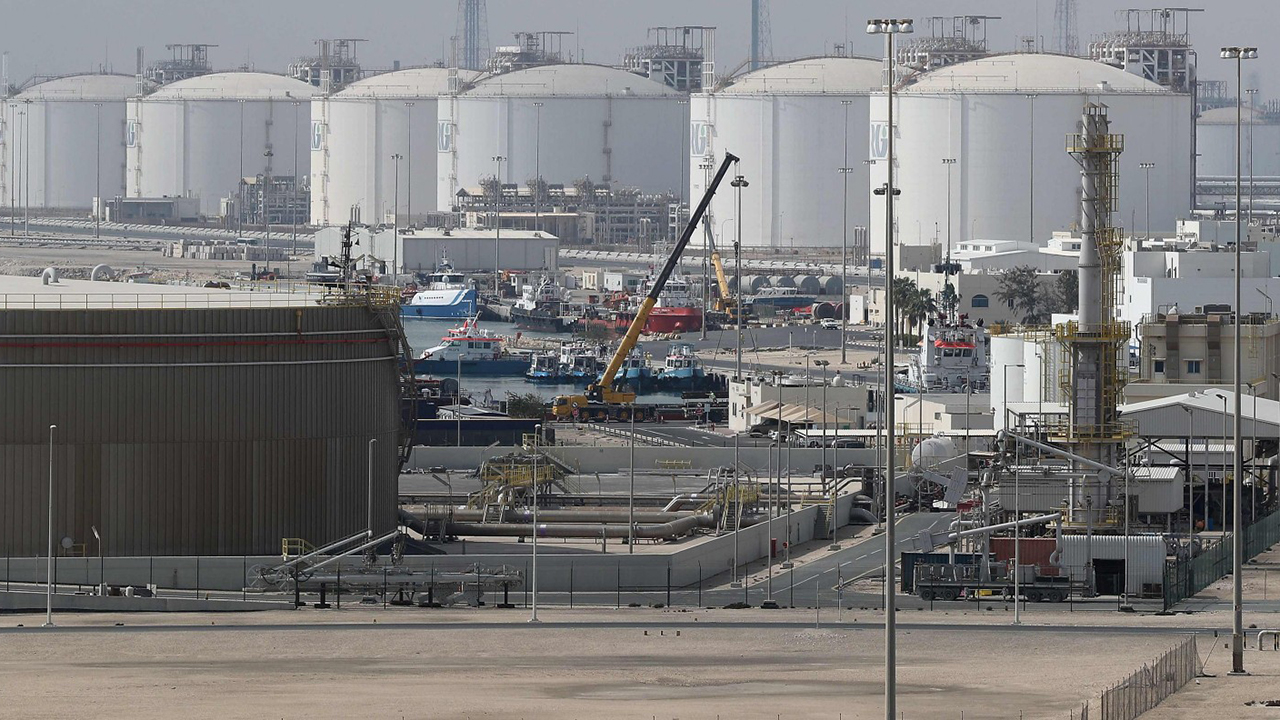
Site of the $500M first phase of Liquefied Natural Gas (LNG) plant with a daily capacity of 2,250 tons in Rumuji, River State, built by Greenville LNG. Chairman of the group, Mr. Eddy van den Broeke, said at the commissioning that it would be generating about 750 million tons per year. The company’s Managing Director, Ritu Sahajwalla said the project was targeted to the northern zone of the country where pipelines doesn’t exist, through the truck system the company seeks to introduce. The truck transportation she explained is like a mobile phone were trucks take the LNG directly to the end user to produce power which translates that one truck can produce five megawatt of power. Photo: Business Hilights
A big move capable of brushing down the high price of Liquefied petroleum gas (LPG) otherwise called cooking gas in Nigeria is underway by the Federal Government through the Petroleum Equalisation Fund (PEF).
Otherwise, the agency is on the verge of kicking off equalisation of LPG with the additional advantage of not only causing drop in price, but end deforestation, forest exploitation and jump start massive use of clean cooking energy.
The Executive Secretary of the organisation, Ahmed Bobboi, who revealed the development at a forum, noted that the equalisation would be done through railway networks as all necessary approval have been secured.
According to him, contractors have been mobilised, while necessary equipment were being constructed to automate downstream activities in the country, especially the supply of petroleum products across the nation.
Bobboi averred that “On completion, the country would be able to ascertain the actual demand and supply of the products across the nation, thereby providing accurate data that would enable government and the private sector to plan as well as reduce product hoarding and smuggling.
“PEF is aware that when product availability at uniform price in riverside communities, especially in the Niger Delta had remained a challenge; the administration would implement an initiative that targets petroleum products delivery to riverside and mountainous areas”.
“By equalising gas in this country, we will be able to reduce environmental pollution and deforestation. This is a global concern. United Nations and governments across the world are promoting the issue of clean environment, we are certain that we will reduce the challenge through gas equalisation.”
Continuing, Bobboi recalled that “With sensor automated fuel management system and sensor network, the country would no longer continue to estimate the level of demand and supply of products in the country.
Earlier in his remarks, the General Manager, Corporate Services, PEF, Dr. Goddy Nnadi, noted that the plan would enable the agency monitor products from tank farms to retail outlets.“People keep asking how many litres of petrol we use daily. We have all kinds of figures, but with this we can give you one figure that nobody can dispute.
He said “We will be able to tell the country what level of fuel every filling station has. We would monitor products that go into the tanks of the outlets. That would stop hoarding because if you tell us you don’t have fuel, from our system we will know if you have or not and even give you the exact quantity.”
Business Hilights gathered that the initiative, being implemented with the National Bureau of Statistics (NBS) could take off before the end of this year on completion of several ongoing railway reconstructions.