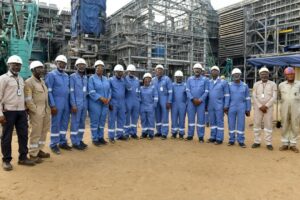


Egbin Power Plant
The Nigerian Independent System Operator (NISO) has confirmed that Lagos is currently facing a major electricity crisis after the sudden shutdown of the Egbin Thermal Power Station, Nigeria’s largest power-generating plant, combined with a critical transmission fault that has sharply reduced electricity supply across the state.
The disruption, according to NSIO, has already triggered widespread outages, load shedding and fears of prolonged blackouts for millions of residents and businesses in the commercial capital.
Business Hilights.ng gathered that the crisis began on Monday, 28 April, when Egbin Power Station suffered a catastrophic technical failure at approximately 8:21 p.m., causing its electricity generation to crash from about 641 megawatts to zero almost instantly.
Further findings revealed that the shutdown was caused by a major malfunction involving the plant’s central compressor and circulating water pump system, forcing all generating units offline in an emergency stoppage.

Furthermore, the collapse at Egbin was compounded by a simultaneous outage on the crucial Osogbo–Ikeja West 330kV transmission line — one of the major electricity corridors supplying Lagos — significantly worsening the state’s power shortage and limiting the ability of the national grid to reroute alternative supply into Lagos.


The double setback has placed enormous strain on an already fragile national electricity system, with Lagos, Nigeria’s economic nerve centre, bearing the brunt.
Egbin Power Station, located in Ikorodu, Lagos State, is widely regarded as the backbone of power supply to the South-West region due to its installed capacity of over 1,300MW. Its sudden collapse has therefore left distribution companies such as Ikeja Electric and Eko Electricity Distribution Company struggling to manage supply deficits.
Industry analysts warn that the development could trigger one of the worst electricity disruptions Lagos has experienced in recent months, especially as Nigeria’s national grid was already under severe pressure from gas shortages and infrastructure instability.