
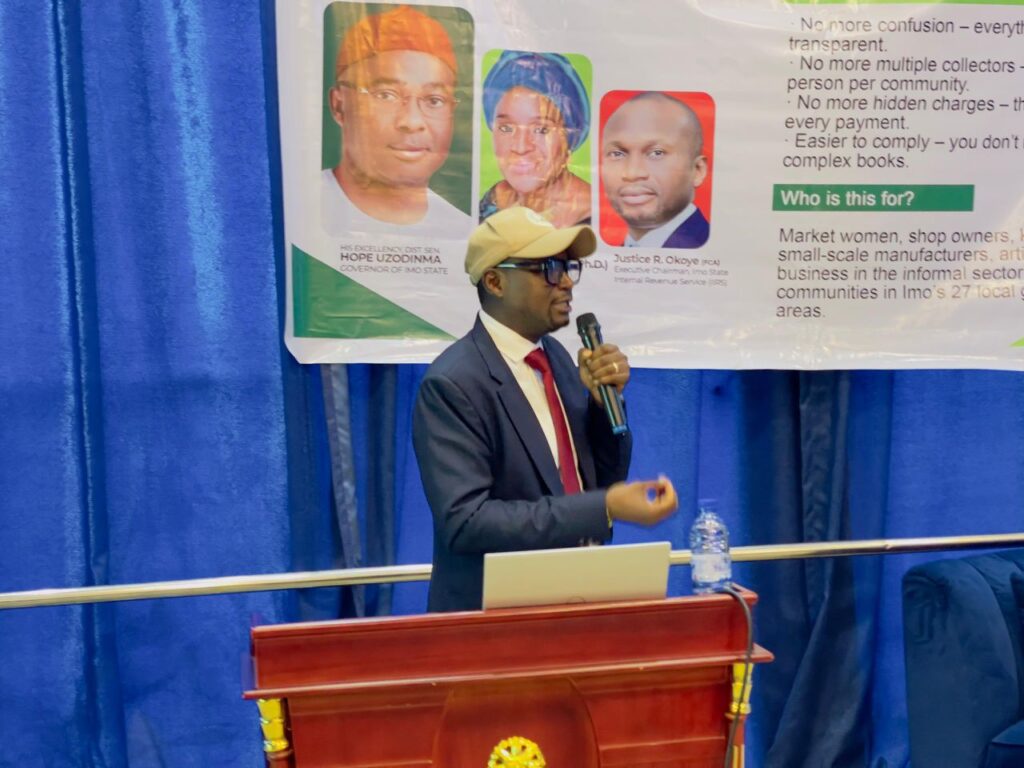
Chairman of IIRS, Justice R. Okoye addressing participants during the official launch of OCORA in Owerri recently
In order to recalibrate the civic participation of citizens, the Imo State Internal Revenue Service (IIRS) has unveiled the “One Community One Revenue Agent” (OCORA) initiative—a program designed not merely to collect funds, but to cultivate a culture of transparent civic participation at the village level.
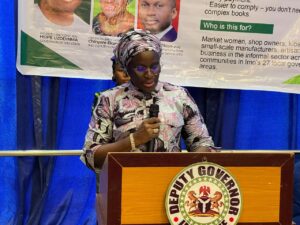
The recent formal launch took place during a high-level stakeholders’ assembly in Owerri, where the Deputy Governor, Lady Chinyere Ihuoma Ekomaru, PhD, standing in for the Executive Governor, set the tone by framing the effort as a moral and administrative imperative. She hailed OCORA as a decisive intervention to fortify public accountability, seal fiscal loopholes, and ensure that every nook of the state contributes fairly to its own upliftment.
At the heart of the initiative, as elucidated by IIRS Executive Chairman, Mr. Justice R. Okoye, is a simple yet profound proposition: broaden the tax net by meeting businesses where they are. The framework is engineered to boost voluntary adherence, dismantle the chaos of unauthorized levies, and formally register enterprises that have long operated outside the official economy—bringing them into the light of shared responsibility.
The Governor’s Chief of Staff, Barr. Nnamdi Anyaehie, amplified the democratic spirit of the program, describing it as a vehicle for mass engagement—one that invites ordinary citizens to see tax compliance not as a burden, but as a direct lever for communal progress.
Echoing this sentiment, the Commissioner for Finance and Coordinating Economy, Mr. Chuck Chukuemeka, called for a whole-of-government alliance to shepherd the initiative to fruition, emphasizing that a fortified revenue base is the bedrock of enduring development.


Meanwhile, the Commissioner for Trade, Commerce and Investment, Barr. Chief Rex Anunobi, noted that by enlisting traditional rulers and community leaders as allies, OCORA stands to absorb the vast informal sector into the formal fold—expanding both equity and efficiency.
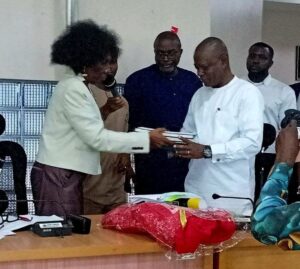
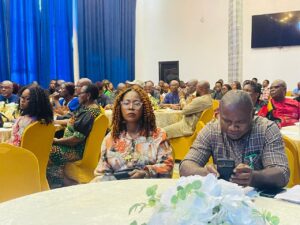
The gathering drew a broad cross-section of the state’s administrative leadership, including the Commissioners for Local Government, Entrepreneurship, and Budget Planning, alongside all 27 Local Government Area Chairmen.
— showcasing the unified political will behind the project.
As the meeting adjourned, stakeholders across the board pledged their unwavering backing, voicing confidence that OCORA will usher in an era of fiscal clarity, broaden the tax base, and, most crucially, translate public revenues into tangible improvements in community life—proving that when citizens and state act in concert, prosperity becomes a shared inheritance.