
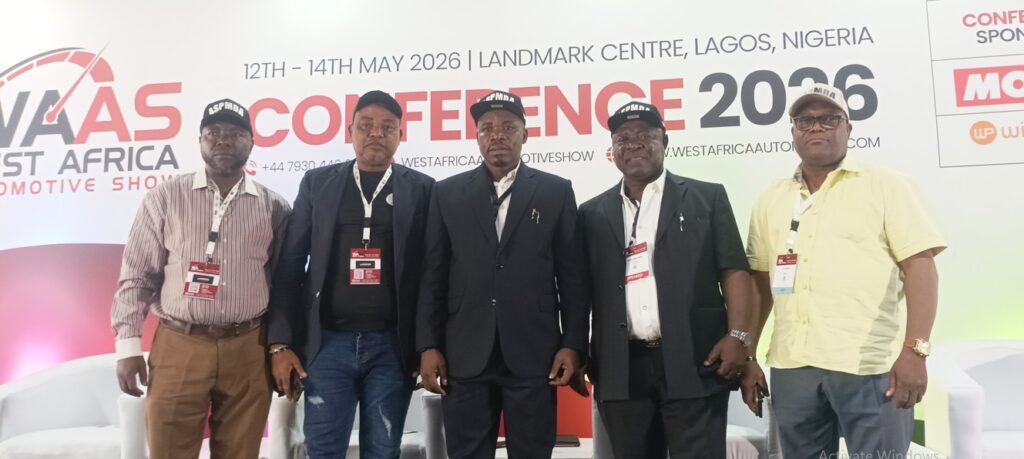
DG of NADDC, Otunba Jeoseph Osanipin with ASPMDA President, Hon. Ngozi Emechebe and other Principal Executive Officers of ASPMDA during the opening ceremony of WAAS 2026: Photo by Business Hilights
…Set to Give Date for ASPMDA Visit
The Director-General of National Automotive Design and Development Council (NADDC), Otunba Oluwemimo Joseph Osanipin, has paid a working visit to President Bola Ahmed Tinubu on his agency’s activities in advancing Nigeria’s automotive industry, reaffirming the Federal Government’s commitment to industrialisation and global competitiveness.
The strategic meeting, held on Wednesday, July 7, 2026, provided an opportunity for the NADDC boss to update the President on key initiatives and milestones achieved by the Council in driving the growth of Nigeria’s automotive sector.
Osanipin said the engagement focused on the Council’s efforts to strengthen local vehicle manufacturing, deepen automotive value chains, promote innovation, and create an enabling environment for sustainable industry development.
NADDC DG, who met with ASPMDA President and Excos at the recent West Africa Automotive Show (WAAS in Lagos, also informed Mr. President that he has started a development partnership with the largest auto spare parts dealers in Africa, the Auto Spare Parts and Machinery Dealers Association (ASPMDA), where innovation and business development ideas on the way forward for the industry will be put into good use.

Whereas a competent source close to the DG said he will soon visit ASPMDA for finalization of partnership processes with the body, the Executives had about a month ago, informed ASPMDAians to come up with credible investment project proposals for transmission to NADDC.


Otunba Osanipin during the presidential visit expressed appreciation to President Tinubu for granting the audience and for his unwavering commitment to policies aimed at accelerating Nigeria’s industrialisation.
The NADDC Director-General, the President’s support continues to provide the necessary policy direction for the growth of the automotive industry, positioning Nigeria to become globally competitive in vehicle manufacturing and related technologies.
Osanipin reaffirmed the Council’s commitment to implementing programmes and initiatives that will enhance local production capacity, attract investment, generate employment, and contribute meaningfully to Nigeria’s economic diversification agenda.
He noted that under the current administration, the automotive sector remains a key component of the country’s industrial development strategy, with sustained government support expected to further unlock its vast economic potential both in the formal and informal sectors.