
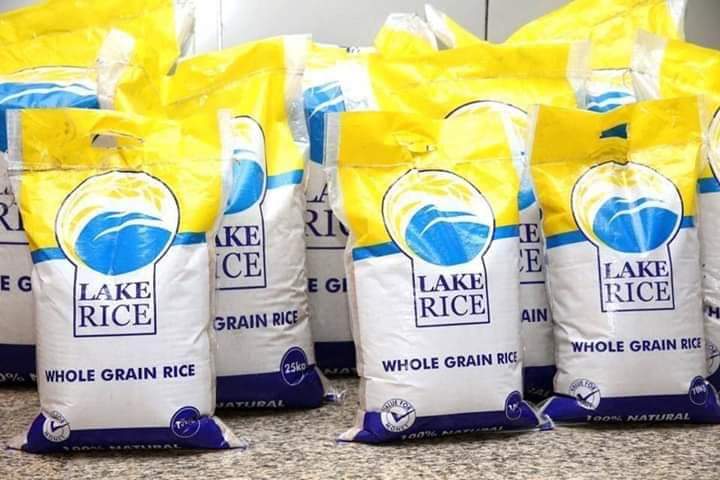
Lake Rice missing in rice sales boom
The National Chairman of the Rice Millers Association of Nigeria (RMAN), Peter Dama, has revealed that one of the major challenges of rice sufficiency in Nigeria stemmed from the inability of several rice farmers to purchase milling and accessories equipment.
He said although efforts to improve mechanisation were ongoing, the high cost of equipment and the prevailing economic situation had discouraged many operators from participating because they cannot buy relevant equipment.
According to him, “The process is on, but people are not really going in there for it because the amount, the money, where is the money? People don’t have the money to really go buy all those things because things are very expensive.”
However, to resolve the puzzle, Dama urged the Federal Government work of a model that will enable rice farmers secure mechanisation options that would benefit smallholder farmers, particularly irrigation equipment and small-scale tractors. “We told them that the truth of this matter is, you can do mechanisation by supplying, you know, solar pumps for irrigation.
Dama noted that “You can also get small tiller tractors or tillers that you can use for farming. They use very little fuel to till your ground, to till your farm. Those are some of the things that people are going into, and you can see a lot of Chinese and Japanese people are bringing in those small tiller tools.”

On the state of the rice milling industry, Dama said large and medium-scale operators were facing significant challenges due to rising production costs, while smaller millers were coping better because of their relatively lower operating expenses.



He said “The industry is not doing very well. In particular, when it comes to the very big, medium, and big millers. The smaller millers, yes, they are because their production cost is not as high. And you know what the situation is about electricity and energy in this country. Petrol is expensive, diesel is expensive.”
“And when people begin to talk of minimum wage, 70,000, people are complaining. Because where is the money? For them, if, for example, you have 20 or 30 staff and you are paying 70,000 naira, where is the money for you to pay 70,000 naira?” he asked, saying “Bank of Industry is the people I know who are in charge of anything tractor-related. Except the bigger, richer farmers. Unless you come up with a cooperative, pulling your resources together. So if you’re pulling your resources together, unless you are in one location.
“But in a situation like our association, somebody is in Niger, somebody is in Enugu, somebody is in Calabar, somebody is in Kaduna. How can you come as a cooperative association to say you pull your money together? Because if I am in Niger, I want the tractor, after contributing my money, to come and work for me.”
Dama argued that despite government efforts to promote mechanisation, inadequate financing continues to limit participation by farmers across the country. “The tractorisation thing is a problem. People don’t have the money.”