

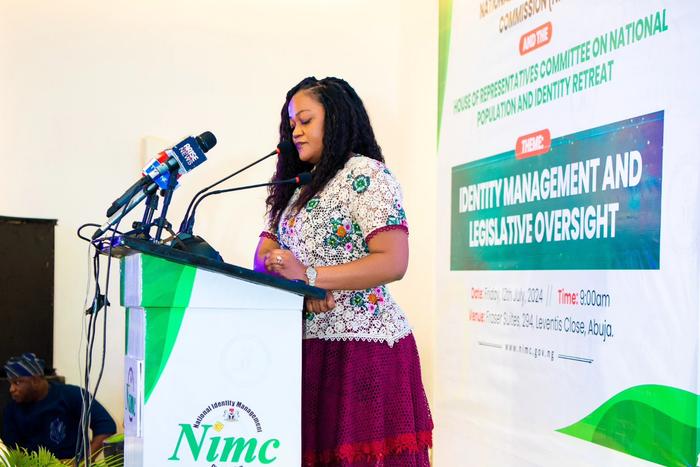
Abisoye Coker-Odusote, D-G, NIMC
The Director General of National Identity Management Commission (NIMC), Engr. Abisoye Coker-Odusote has given insights on why the National Identification Number (NIN) may not after all, serve as tool to track down kidnappers and terrorists in Nigeria.
She gave the insight during an appearance on Channels Television, where she was asked to explain why criminals remain difficult to trace despite the mandatory NIN-SIM linkage policy.
In her explanation, she averred that “A lot of the time, you find out the kidnappers use the phones of the people they have abducted, which means how you trace them because they are not using their own phones?”
“By using their victims’ devices, criminals effectively hide behind the registered identities of innocent people, rendering the NIN trail useless in those scenarios.
Coker-Odusote also raised the possibility that some kidnappers may not appear in Nigeria’s identity database at all, suggesting that certain abductions were effected by individuals brought into the country days before the crime specifically to execute it.

Continuing, she added that “There is a theory that it may be possible that these kidnappers are not Nigerians and are brought into the country 48 or 72 hours before a kidnapping takes place, specifically for that purpose. I’m not insinuating anything, but if that were the case, they naturally would not be captured in our database”.




Whereas she was careful to frame the claim as a theory rather than confirmed intelligence, but said it represented one of the scenarios the Commission had considered, Odusote maintained that the NIN remained central to Nigeria’s security architecture, but acknowledged that its effectiveness depended hugely on collaboration between security agencies, telecom operators and other institutions.
Business Hilights.ng recalls that the Federal Government made NIN registration compulsory for all Nigerians and legal residents to align their SIM card activation, passport applications, bank account opening and access to several government programmes with NIN numbers.
The policy was sold partly on the promise of improved security, with the idea that a traceable identity system would make it harder for criminals to operate anonymously.
However, as it is now, Coker-Odusote’s comments complicate that narrative, suggesting that determined criminals have found ways to work around a system that millions of Nigerians were compelled to enroll in.