
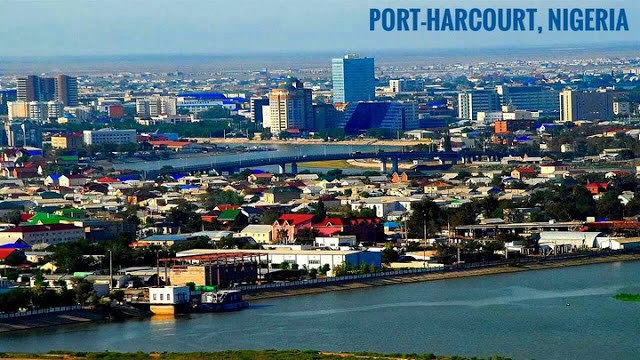
Port Harcourt Port complex built by Lord Fredrick Lugard in 1912 and opened in 1913 the saqme time with Apapa Port
Since the revelation by the Minister of Marine and Blue Economy, Dr. Adegboyega Oyetola, that the £746m facility backed by UK Export Finance (UKEF) will fund the comprehensive rehabilitation of the Lagos Port Complex, Apapa, and the Tin Can Island Port Complex, many Nigerians especially maritime experts have fingered nepotism and official marginalization of Eastern ports which many of them were built almost the same time.
There had been several criticisms by industry experts on how the current government has officially looked away in terms of upgrading eastern ports of Port Harcourt, Calabar, Warri and even Onne but nothing tangible has come up of it, rather every effort of the Minister and the government is on improving Lagos ports and even developing new ones as eastern ports go under.
Business Hilights recalls that whereas the Lagos Port Complex was commissioned in 1913 and it remains one of Nigeria’s oldest and busiest seaport, while the Tin Can Island Port, inaugurated in 1977, was developed to ease pressure on Apapa, it is very important to remember that Port Harcourt Port was built by Lord Lugard in 1912 and commissioned the same 1913 Apapa was commissioned after all.
The veiled truth is that Port Harcourt Port was opened in 1913, Onne Port was established in 1982, and the modern Calabar Port complex was commissioned on June 9, 1979. Port Harcourt was built in 1912 and named in 1913, while Calabar functioned as an older port before its modern modernization.
Port Harcourt Port (Rivers Port): Founded in 1912 by Lord Frederick Lugard and opened to shipping in 1913 to export coal from Enugu.
Onne Port Complex: Established by the Federal Government in 1982 to serve as a major oil and gas logistics hub.
Calabar Port: While recognized as an ancient trading point, the new, modernized Calabar Port complex was commissioned on June 9, 1979, following development under the 3rd National Development Plan.


Accordingly saying that Lagos ports are more important than others of their age is marginalization and official nepotism.

Analysts therefore say instead of using the borrowed fund for only Lagos ports, the fund should be shared amongst the Lagos and eastern ports because all of them serve the nation as well.
According to the Minister, the agreement is scheduled for formal signing during the state visit of President Bola Ahmed Tinubu to London on March 18 and 19, signalling deepening economic ties between Nigeria and the United Kingdom.
Oyetola described the deal which did not include eastern ports as a “defining moment” for Nigeria’s maritime sector, noting that it represents the first comprehensive overhaul of the facilities since their establishment.
His words: “This is not just an upgrade, but a transformation. Our ports have carried the burden of growing trade for decades without matching infrastructure. This project will align them with global standards.”
In all, the Minister was silent on eastern ports as he never made any mention of eastern port of Port Harcourt in the upgrade deal which has the same opening date and service to the nation like Apapa, a scenario many experts described as official nepotism.