
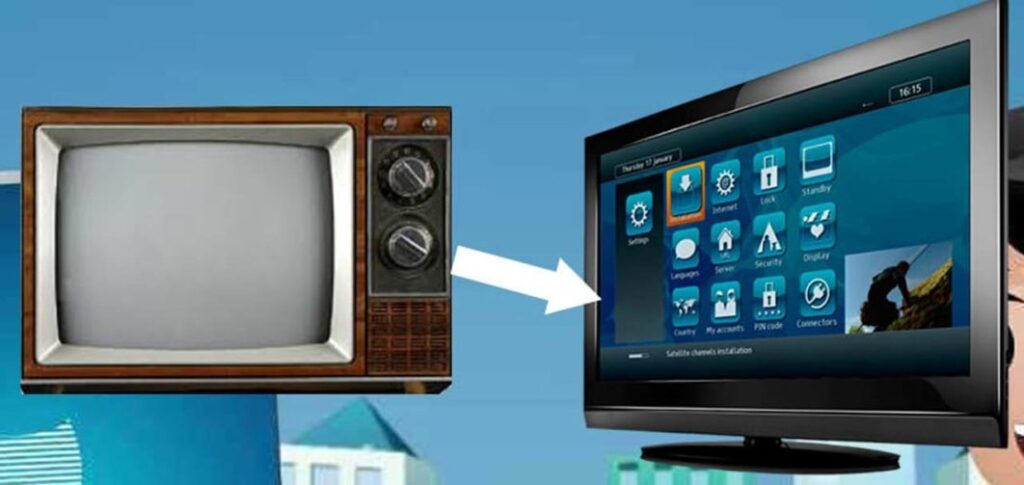
Digital Switch Over (DSO)
Remi Ogunpitan
No doubt, ever since the crusade for Nigeria’s drive to digital switch over (DSO) under the supervision of the National Broadcasting Commission (NBC) from the former President Muhammadu Buhari administration till date, issues and responses have glossed over with opaqueness, diversion and postponment.
however, Nigeria’s Federal Government has said it will officially launch its nationwide Digital Switch Over (DSO) for television broadcasting on June 17, 2026. The transition will shift signals from analogue to digital, promising better picture and sound quality (SD to HD) and access to over 100 free channels.
The Minister of Information and National Orientation, Mohammed Idris, confirmed the launch date following an inspection of facilities at the Nigerian Communications Satellite (NIGCOMSAT) headquarters.
To be direct, the core issues requiring urgent clarification are:
Ownership and control: Who owns, manages, operates, and commercially benefits from FreeTV?
Legal framework: Is the current FreeTV launch a true Digital Terrestrial Television migration under the 2012 DSO White Paper, or is it now a DTH satellite and OTT aggregation platform?
Policy shift: If government has shifted from DTT to satellite/OTT, when was this approved, under what legal authority, and has a new gazetted roadmap been issued?
Public funds: How much public money has been spent on the DSO to date, including the reportedly over ₦60 billion, and what specific assets, infrastructure, contracts, and services were procured. By whom, and who do those assets belong to?
Regulatory conflict: Is NBC acting only as regulator, or is it also functioning as platform operator, content aggregator, or commercial participant in FreeTV?
NigComSat and partners: What is NigComSat’s role, and what are the contractual relationships between NBC, NigComSat, FreeTV, private operators, technology providers, and advertising/data partners?
Consumer costs: If FreeTV is presented as free, what costs must Nigerians still bear for dishes, decoders, installation, data, electricity, renewals, smart devices, or other access requirements?
Audience data and advertising: Who controls audience measurement, viewer data, advertising inventory, monetisation, and revenue distribution?
Broadcaster and producer protection: What protections exist for broadcasters, independent producers, channel owners, and Nigerian content creators whose work gives value to the platform?
Public benefit: How will Nigerians benefit structurally and economically from DSO investments, including spectrum release, improved access, local content development, and creative industry growth?
Stakeholder consultation: Why has there not been a full public stakeholder roundtable involving broadcasters, signal distributors, set-top-box manufacturers, content producers, advertisers, consumer groups, and the public before launch?
These questions arise directly from legitimate industry concerns, including BON’s warning that the current arrangement may be a DTH/OTT aggregation platform rather than the DTT migration contemplated under the 2012 White Paper and ITU GE06 obligations.
Who will answer these questions truthfully?
*Ogunpitan, wrote in from Lagos