
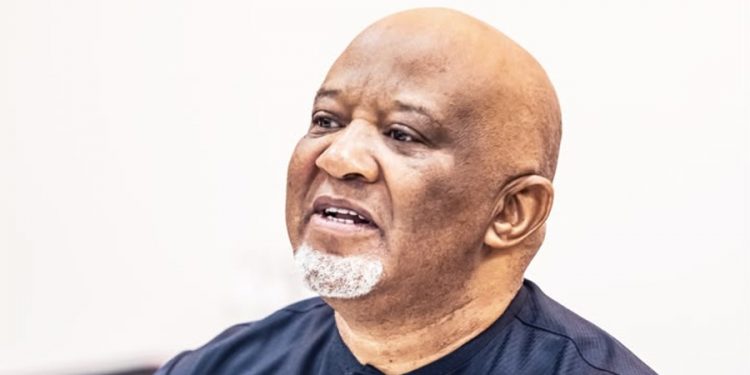
Mcebisi Jonas, MTN Group Chairman
Former South African Deputy Minister of Finance and current board chairman of MTN Group, Mr. Mcebisi Jonas has tactically condemned the ongoing xenophobic crisis in his country, South Africa, saying the ongoing anti-foreigner sentiment in South Africa is a symptom of state failure being cynically exploited by politicians with no interest in genuine solutions.
Jonas remarks at the funeral service of Zimbabwean-born activist and public servant Thokozani Damasane, drew on philosophy, personal memory, and sharp political analysis and has circulated widely since the service and is being discussed across South African civil society as one of the most substantive interventions by a senior business figure into a crisis that has repeatedly damaged South Africa’s standing on the African continent.
Just as Nigeria flew back the second batch of her citizens from South Africa few hours ago, MTN Group – the Johannesburg-headquartered telecommunications giant operates across 19 African markets and has a direct commercial stake in continental integration and political stability.
In Zimbabwe, Jonas told mourners that the central question of his remarks had come to him as he drove to the service. He had been listening, he said, to voices calling for foreigners to leave South Africa – and the contrast between that sentiment and the life he was about to commemorate stopped him.
“I was thinking, what is home to Damasane?” he said. “Because I understand, and I understood very early in life, that home is where humanity is. Home is about humanness. It is about the good of humanity and striving for the good of humanity.”
Business Hilights.ng recalls that late Thokozani Damasane was born and educated in Zimbabwe before relocating to South Africa during the post-apartheid transition period. Jonas described him as arriving “as an outcast” into a country still finding its post-liberation footing – and choosing, nonetheless, to commit himself entirely to its struggles and its people.
“He immersed himself deeply into the struggles, into the pains of South Africans, and he became one of us,” Jonas said. “In Damasane’s strength, our strength as South Africa and South Africans are reflected. And in his weaknesses, our own weaknesses are reflected.”


In his emotion-laden speech, Jonas turned directly to the question of whether removing foreign nationals would address South Africa’s underlying socioeconomic according to him, “Foreigners can leave tomorrow – inequality will be with us,” he told the congregation. “Foreigners will leave tomorrow – unemployment will be with us. Foreigners will leave tomorrow – our police will remain corrupt. Foreigners will leave tomorrow – our politicians will still be concerned with one thing: being elected and re-elected.”

In conclusion, he clearly placed responsibility for the crisis squarely on the state, arguing that “The problem is the failure of the state. The state doesn’t manage immigration. It doesn’t manage its borders. It doesn’t enforce law enforcement. It doesn’t manage education. What are you expecting?”
“As I stand up today, I look at South Africa. The level of oppression and inequality, the level of exclusion of our people, the level of corruption, the betrayal of the dream of liberation – those words of Damasane ring very loud in my ears.”
“South Africa is Nothing Without Africa.”
Jonas closed with a call for what he described as a return to “national consciousness” – one rooted in continental solidarity and economic interdependence rather than ethnic exclusion.
“We are a nation embedded in Africa,” he said. “And without Africa, our growth as a country – economically – our fortune is intertwined with the growth of Africa. South Africa is nothing without Africa. And Africa is nothing without South Africa.”